Basics
What is a urostomy?
An evidence-based guide to what a urostomy is, why it is created, the most common type (ileal conduit), and what daily life looks like after one.
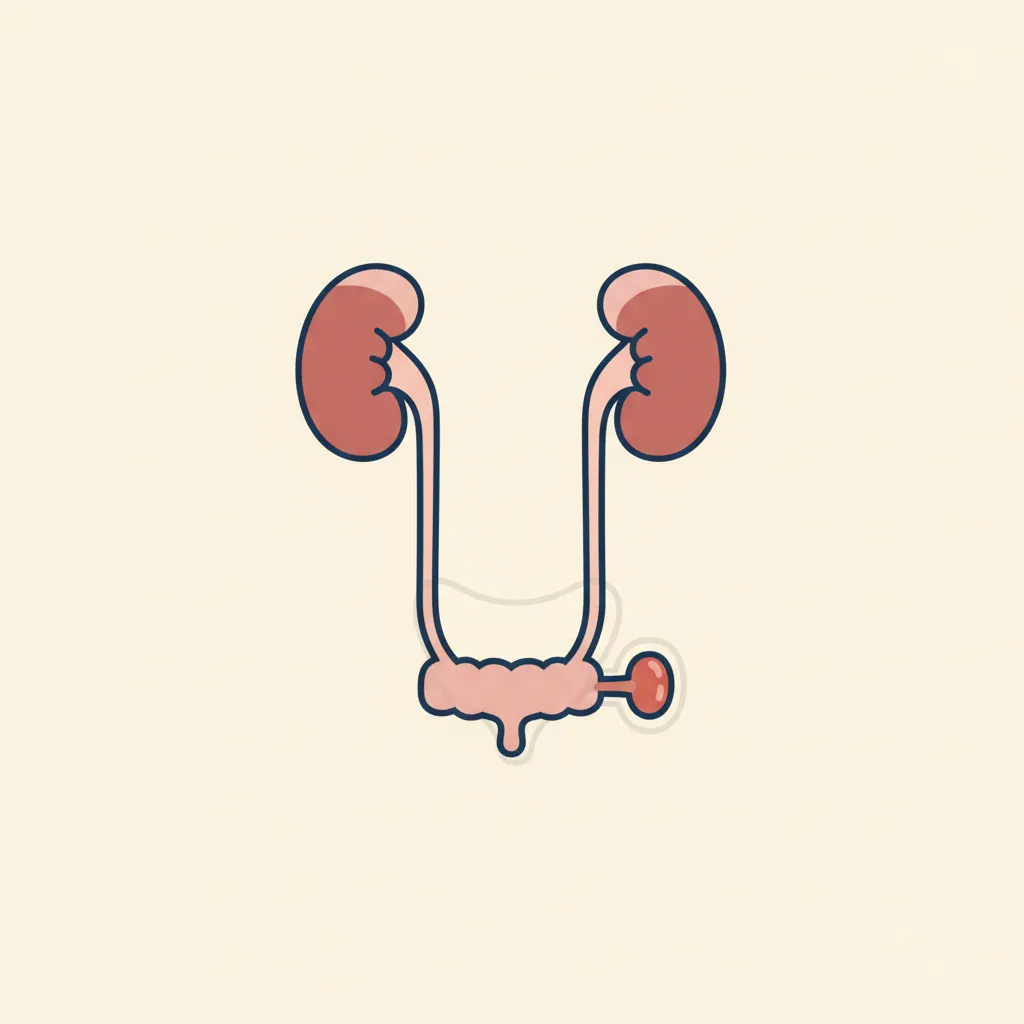
On this page
- What does a urostomy look like?
- Why might someone need a urostomy?
- How does an ileal conduit work?
- How is the surgery performed?
- What does urostomy output look like?
- Living with a urostomy: the daily routine
- Emptying the pouch
- Night drainage
- Changing the pouch
- Hydration
- Diet
- Clothing
- Showering and swimming
- Sex and intimacy
- Travel and work
- What complications should I be aware of?
- Stoma and skin issues
- Urinary tract infections (UTIs)
- Kidney issues
- Metabolic changes
- Stones
- When to seek medical help
- Other types of urinary diversion
- Continent cutaneous reservoir (e.g. Indiana pouch)
- Orthotopic neobladder
- Support and community
- The bottom line
A urostomy is a surgical opening (stoma) that diverts urine out of the body through the abdominal wall into a pouch, instead of through the urethra. It is created when the bladder has been removed or can no longer store or empty urine safely. Because the kidneys make urine continuously, it drains into the pouch in a steady trickle. A urostomy is almost always permanent.
A urostomy is one of several types of urinary diversion. By far the most common form worldwide is the ileal conduit, sometimes called a Bricker conduit after the surgeon who first described it in 1950. Other urinary diversions, such as continent cutaneous reservoirs and neobladders, do not produce a continuously draining stoma — but the term urostomy in everyday language almost always refers to the ileal conduit.
This guide explains what a urostomy is, why it might be created, what to expect from surgery and recovery, and how daily life works after one.
What does a urostomy look like?
A urostomy stoma is a small section of small intestine — usually 2–3 cm across — brought to the skin surface. It looks similar to the inside of your cheek: pink to red, moist, and well supplied with blood. It has no nerve endings and is not painful to touch or clean.
The stoma is usually placed on the right side of the abdomen but can be on either side depending on individual anatomy. As with all stomas, the location is ideally chosen before surgery by a stoma care nurse, with the patient sitting, standing, and lying down — a flat, easily visible site away from skin creases, scars, the belt line, and the bony pelvis dramatically improves long-term pouching success.
Urostomy stomas are usually built to protrude slightly so that urine drops cleanly into the pouch rather than pooling against the skin.
Why might someone need a urostomy?
A urostomy is created when the bladder either has to be removed or can no longer be used safely. The main reasons include:
- Bladder cancer, particularly invasive cancers that require removal of the entire bladder (radical cystectomy) — by far the most common reason for an ileal conduit
- Neurogenic bladder — bladders that no longer work properly because of spinal cord injury, multiple sclerosis, spina bifida, or other neurological conditions
- Congenital bladder abnormalities in children, such as bladder exstrophy
- Severe pelvic radiation damage causing a shrunken or bleeding bladder
- Severe interstitial cystitis that has failed all other treatments
- Pelvic trauma
- Some gynaecological cancers (cervical, uterine) when treatment involves bladder removal
- Chronic, severe incontinence that has failed every other approach
For each of these, several types of urinary diversion may be possible. Ileal conduit is usually the simplest, safest, and best-studied option — particularly in older patients or those with reduced kidney function. Continent diversions (Indiana pouch, Mainz II, neobladder) are alternatives for selected patients and have their own trade-offs.
How does an ileal conduit work?
In an ileal conduit:
- A short section of small intestine (typically 15–20 cm of ileum) is isolated from the rest of the bowel
- The cut ends of the remaining bowel are reconnected so digestion continues normally
- The two ureters (the tubes that carry urine from each kidney) are stitched into one end of the isolated bowel
- The other end of the bowel is brought through the abdominal wall as the stoma
The isolated bowel does not absorb or digest anything — it acts as a passive pipe that channels urine from the kidneys to the outside of the body. Because urine production is continuous, a urostomy drains continuously — and a pouch with anti-reflux features is worn at all times.
How is the surgery performed?
Urostomy surgery is usually carried out under general anaesthetic and, in most patients, takes 4 to 8 hours — much longer than colostomy or ileostomy surgery because the bladder usually has to be removed first.
The operation can be performed:
- Open through one larger lower-abdominal incision
- Laparoscopically through several smaller incisions and a camera
- Robotically with a surgical robot — the most common approach in many specialist centres today
A typical hospital stay is 5 to 10 days, depending on the underlying surgery and recovery.
What does urostomy output look like?
The output of a urostomy is urine. In the first days and weeks after surgery, you will also see mucus — a normal, lifelong feature of an ileal conduit because the bowel used to make the conduit continues to produce mucus, even though it is no longer digesting food.
Urine should be clear to pale straw-coloured when hydration is good. Cloudy, dark, foul-smelling, or persistently blood-tinged urine should be discussed with a stoma care nurse or doctor.
Living with a urostomy: the daily routine
Emptying the pouch
A urostomy pouch has a tap or valve at the bottom that is opened to drain urine into a toilet. Most people empty the pouch when it is one-third to one-half full — typically every 2 to 4 hours during the day, similar to how often you would normally pass urine.
Night drainage
Because urine drains continuously, most people connect their urostomy pouch to a larger night drainage bag at bedtime. This is a separate, larger bag (1–2 litres) that sits on a stand or hangs at the side of the bed and collects urine through the night so you can sleep without getting up.
The night drainage bag is then disconnected in the morning, emptied, rinsed (and changed at the manufacturer’s recommended frequency, often weekly).
Changing the pouch
The full pouching system (or just the pouch in a two-piece setup) is changed on a regular schedule — typically every 2 to 4 days. The skin around the stoma is cleaned with warm water, dried thoroughly, and a fresh barrier applied. The whole change usually takes 5–10 minutes once a routine is established.
Hydration
People with a urostomy should aim for around 2 litres of fluid a day in normal conditions. Good hydration:
- Keeps urine dilute, which reduces the risk of urinary tract infections
- Reduces mucus build-up in the conduit
- Helps protect the kidneys long-term
Most beverages count — water, tea, coffee, juice, and milk. Cranberry juice has often been suggested for urostomy hydration; the evidence for cranberry as a UTI preventative is mixed, and any fluid that helps you drink more is helpful.
Diet
There are usually no major dietary restrictions after the initial post-surgery recovery. Some foods can change urine smell or colour (asparagus, beetroot, strong B-vitamin supplements) — this is harmless. Most people return to a near-normal diet within 6–8 weeks.
Clothing
Urostomy pouches are flat, slim, and invisible under most clothing. Many people prefer high-waisted underwear or a discreet support belt for extra security, especially during exercise.
Showering and swimming
Urostomy pouches are fully waterproof. Showering, bathing, and swimming are all safe. Some people prefer to shower with the pouch off; water will not enter the stoma.
Sex and intimacy
A urostomy does not prevent a normal sex life, although confidence often takes time to rebuild. Specialist support — through stoma care nurses, ostomy associations, and sexual-health specialists — is widely available and effective.
For people who have had a radical cystectomy:
- In men, the prostate and seminal vesicles are usually also removed, which causes erectile and ejaculatory changes that are very treatable today (medication, devices, implants)
- In women, parts of the front of the vagina may also be removed depending on the cancer; reconstruction is possible and vaginal dryness can be managed
A frank conversation before surgery with the urology team is essential and welcomed by most teams.
Travel and work
People with urostomies travel widely and work in every profession. Practical tips:
- Carry double the usual supplies in hand luggage
- Carry an ostomy travel certificate for airport security (most national ostomy associations publish a template)
- Aim for extra hydration in hot or high-altitude destinations
- Identify a pharmacy near your destination as a backup
- For physical work, ramp up gradually in the first three months to reduce hernia risk
What complications should I be aware of?
Most urostomies do well long-term, but several issues can occur and are worth recognising early.
Stoma and skin issues
- Skin irritation around the stoma — usually because urine is leaking onto the skin. A better-fitting pouching system, often with a convex barrier, almost always solves this.
- Encrustation — small white crystals (often calcium-phosphate) deposit on the stoma or pouch outlet. More common with alkaline urine and poor hydration; usually managed with diluted vinegar washes and increased fluid intake.
- Stoma changes — prolapse, retraction, stenosis, and parastomal hernia can all occur, similar to other types of stoma.
Urinary tract infections (UTIs)
Slightly more common than in the general population, but most people have very few. Drinking enough water is the single best preventative.
Kidney issues
The kidneys are particularly important to protect after a urostomy. Some people develop:
- Hydronephrosis — kidney swelling caused by backflow or narrowing where the ureter joins the conduit
- Reduced kidney function over years, especially if there are repeated infections or chronic dehydration
An annual review with bloods (creatinine, eGFR) and a periodic ultrasound is standard for most patients.
Metabolic changes
Because a small section of bowel is in continuous contact with urine, a few people develop a mild metabolic acidosis — a slight imbalance in the body’s acid-base chemistry. This is rarely a clinical problem with a normal-length ileal conduit, but is checked at annual reviews.
Stones
Urinary stones are slightly more common after urostomy surgery. Symptoms include sudden severe back or side pain, blood in the urine, or fevers — these should be assessed promptly.
When to seek medical help
Contact your stoma care nurse, GP, or urology team if you notice:
- The stoma changes colour to dark purple, brown, or black
- No urine output for several hours despite normal fluid intake
- Fever, chills, or back pain (possible kidney infection)
- Persistent blood in the urine (small amounts on the stoma or with pouch changes can be normal but persistent or heavy bleeding is not)
- Cloudy, foul-smelling urine with feeling unwell
- Severe pain or swelling around the stoma
- A new bulge around the stoma that doesn’t go down when lying flat
- Persistent skin breakdown around the stoma despite usual pouching adjustments
Other types of urinary diversion
While ileal conduit is the most common urostomy, two other options exist for selected patients.
Continent cutaneous reservoir (e.g. Indiana pouch)
A reservoir is built inside the abdomen from a longer section of bowel and connected to the skin through a one-way valve. The reservoir is emptied by inserting a thin catheter through the stoma several times a day — there is no continuous drainage and no pouch is worn. Best suited to motivated patients with good manual dexterity and reliable follow-up.
Orthotopic neobladder
A new bladder (“neobladder”) is built from bowel and connected directly to the urethra. Urine is passed out of the body the normal way, although the sensation of fullness and the act of voiding are different (often by relaxing pelvic floor muscles and applying gentle abdominal pressure). Best suited to selected patients whose disease and anatomy allow it. Daytime continence is generally good; some night-time leakage is common in the first 6–12 months.
Both options have benefits and trade-offs and aren’t suitable for everyone. The choice should be made after a careful conversation with a urology team experienced in all three approaches.
Support and community
Support is widely available and usually free of charge:
- Stoma care nurses at your hospital or community clinic — your most useful long-term resource
- National ostomy associations in your country — most run helplines, peer-support visitor programmes, and local meet-ups
- Bladder cancer patient advocacy groups if your urostomy was created for bladder cancer — disease-specific information, peer support, treatment-decision resources
- Online peer communities for day-to-day questions, shared experiences, and lifestyle tips
- Specialist counselling through hospital teams or community mental-health services if emotional adjustment is harder than expected
Talking to someone who has lived well with a urostomy for years is one of the most useful steps for anyone preparing for, or newly recovering from, the surgery.
The bottom line
A urostomy is a permanent surgical opening that diverts urine through the abdominal wall, most commonly using a short section of small intestine as a passive pipe (ileal conduit). It is one of the most important surgical advances of the twentieth century — and for the great majority of people, life with a well-fitting urostomy pouch is full, active, and confident.
The two practical priorities are good pouching (a well-fitting system with help from a stoma care nurse) and good hydration (enough fluid, every day). With those in place, almost everything else is normal life.
Free guide
The New Ostomy Patient Guide
Everything for the first weeks with a stoma — pouching, skin care, diet, and getting back to daily life. Written with stoma care nurses. Free, by email.
Common questions
Frequently asked questions
- Is a urostomy permanent?
- Yes — in almost all cases. A urostomy is typically created after the bladder has been removed (a procedure called cystectomy) or when the bladder no longer works safely. Unlike some colostomies and ileostomies, a urostomy is not reversed because the bladder is no longer there to reconnect to. The good news is that long-term outcomes are excellent for most people.
- How does urine come out of a urostomy?
- Continuously. The kidneys make urine all day, every day, so urine drips into the pouch in a steady trickle rather than coming out in batches. A drainable urostomy pouch has a tap or valve at the bottom that is emptied into the toilet several times a day, and most people attach a larger 'night drainage bag' to the pouch at bedtime so they can sleep through without getting up.
- What is an ileal conduit?
- An ileal conduit is the most common type of urostomy. A short section (about 15–20 cm) of small intestine — the ileum — is taken out of the bowel, with the cut ends of bowel reconnected so the rest of the digestive system works normally. The two ureters (the tubes from the kidneys) are sewn into one end of this isolated piece of bowel, and the other end is brought through the abdominal wall as the stoma. The bowel section is not used for digestion — it just acts as a passive pipe.
- Will I have mucus in my pouch?
- Yes — and that is completely normal. The piece of small intestine used to build the urostomy continues to make mucus, even though it is no longer connected to the bowel. You will see white or cloudy stringy material in the pouch, especially in the first 6–12 months. It can be reduced by drinking enough fluid, and it usually decreases over time but never disappears entirely.
- Will I get more urinary tract infections?
- People with a urostomy are at slightly higher risk of urinary tract infections (UTIs) than the general population, but most never have a serious problem. The single most important prevention is drinking enough water — aim for around 2 litres a day so urine stays pale and there is good flow through the conduit. Always change the night drainage bag at the recommended frequency and clean reusable equipment properly. See your doctor promptly if urine becomes cloudy, foul-smelling, blood-tinged, or you develop fever, back pain, or feel unwell.
- Do you still urinate normally with a urostomy?
- No — the route changes. With a urostomy, urine no longer passes through the urethra. Instead it drains continuously through the stoma into a pouch worn on the abdomen, which is emptied into the toilet several times a day and connected to a larger night drainage bag for sleep. You do not feel the urge to urinate as you did before. A neobladder, a different type of urinary diversion, is the option that lets some people pass urine through the urethra again.
- How do you wear trousers or pants with a urostomy bag?
- Most people wear their normal clothing with a urostomy pouch, which lies flat and slim against the body and is invisible under most outfits. Many find high-waisted trousers, underwear, or a soft support belt comfortable because the waistband sits above or below the stoma rather than pressing on it. The pouch is best positioned so it can still be emptied easily, and a stoma care nurse can help mark a stoma site that avoids the belt line.
- Is a urostomy bag painful?
- No. The stoma itself has no nerve endings, so it is not painful to touch, clean, or wear a pouch over. Ongoing pain around a urostomy is not normal and usually points to a treatable cause — skin irritation from leaking urine, a poorly fitting pouch, encrustation, or a complication such as a parastomal hernia or infection. Report persistent pain, swelling, or skin breakdown to a stoma care nurse or doctor rather than tolerating it.
- What is the difference between a urostomy and a stoma?
- A stoma is the general term for any surgically created opening that brings part of the bowel or urinary tract to the surface of the abdomen. A urostomy is one specific kind of stoma — one that diverts urine, most often via an ileal conduit. Colostomies and ileostomies are other kinds of stoma that divert stool. So every urostomy is a stoma, but not every stoma is a urostomy.
References