Complications
Parastomal hernia
What a parastomal hernia is, why it happens, the warning signs, how to prevent it, and the support-belt, lifestyle and surgical options for managing one.
On this page
A parastomal hernia is a bulge that forms when abdominal contents push through a weakness in the muscle wall beside the stoma, where the surgeon made the opening to bring it to the surface. It is one of the most common long-term stoma complications, affecting roughly 30% to over 50% of people. Most are managed comfortably with a fitted support belt and pouching adjustments; surgery is reserved for severe or complicated cases.
It is one of the most common long-term complications of living with a stoma — and also one of the most manageable. Understanding the warning signs, how to lower your risk, and the options for managing one puts you firmly in control.
What a parastomal hernia is
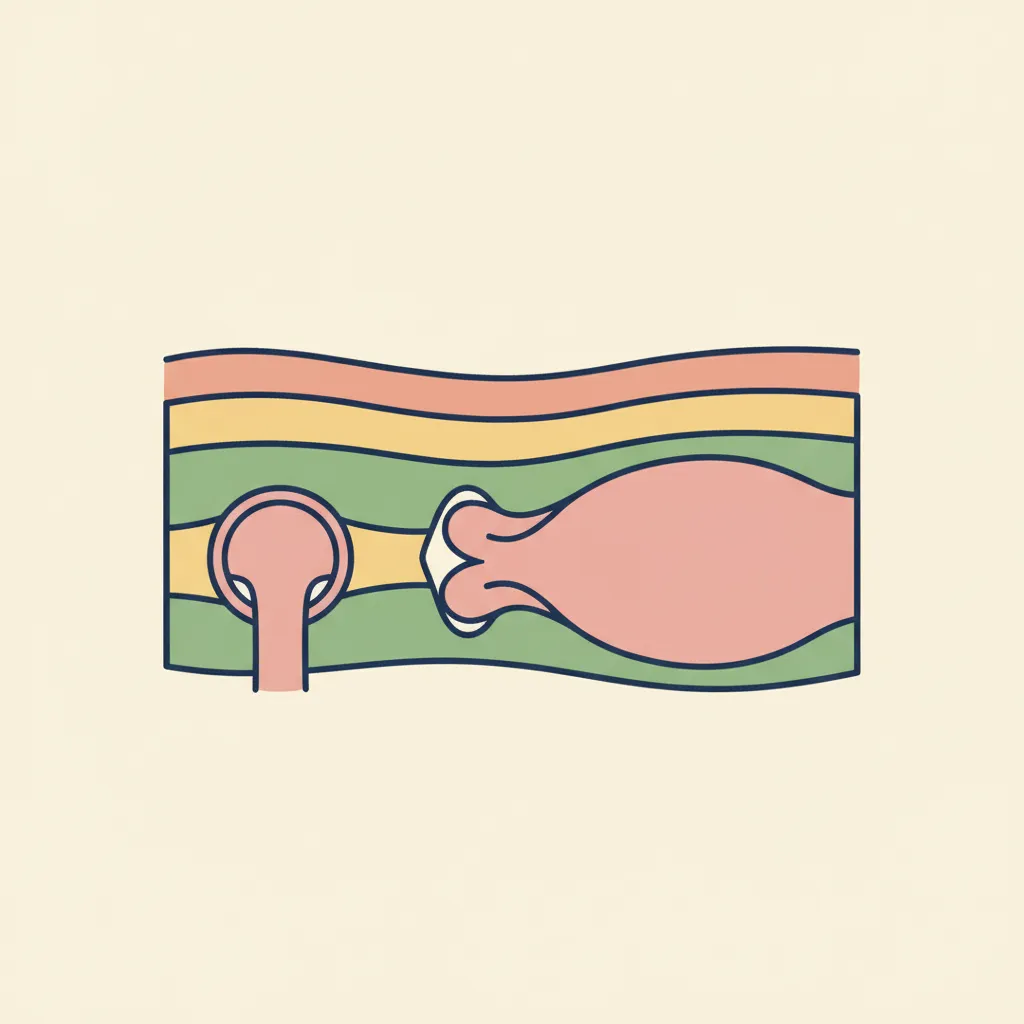
To bring a stoma to the surface, the surgeon makes an opening through the abdominal muscle wall. That opening is necessary, but it is also a natural point of weakness. Over time — especially under the strain of coughing, lifting or straining — a loop of bowel or other abdominal contents can push through the gap beside the stoma, doming the skin outward into a visible bulge.
It is, in effect, the same kind of hernia that can occur at any weak point in the abdominal wall, but located right next to the stoma.
How common is it?
Very common. Reported rates range from about 30% to over 50% of people with a long-term stoma within a few years of surgery. The risk:
- Is highest in the first year after the operation
- Rises over time — the longer you have a stoma, the more likely a hernia becomes
- Is higher with greater body weight, weaker abdominal muscles, chronic coughing, and repeated heavy lifting or straining
Because it’s so common, recognising it early and managing it well is part of normal long-term stoma care — not a sign that anything has gone wrong.
Warning signs
Most parastomal hernias develop gradually. Typical features:
- A bulge or swelling around the stoma that’s more obvious when you stand, cough or strain, and often flattens when you lie down
- A dragging or aching discomfort (though many hernias are painless)
- Difficulty getting the pouch to fit and stick, because the changing skin contour disrupts the seal
- Occasionally, changes in how the stoma works
When to seek urgent help
Most hernias are not emergencies, but a hernia that becomes trapped (incarcerated) or strangulated is. Seek urgent medical attention if a hernia suddenly becomes:
- Hard, very painful or tender
- Discoloured (red, purple or dark)
- Accompanied by your stoma stopping working — no output, with nausea, vomiting or cramping abdominal pain
These can signal that bowel is trapped and its blood supply is compromised, which needs prompt assessment.
How to lower your risk
You can’t eliminate the risk, but you can meaningfully reduce it:
- Protect the abdominal wall after surgery. Avoid heavy lifting for the first 6–12 weeks while the muscle heals.
- Build core strength gradually, ideally with guidance from a physiotherapist who understands stoma surgery. Strong, well-conditioned abdominal muscles support the stoma site.
- Wear a support belt or wrap during higher-risk activity — lifting, carrying, gardening, sport. Even gentle, even compression reduces strain on the muscle around the stoma.
- Lift well: bend at the knees, keep loads close, and brace gently rather than straining.
- Manage a chronic cough or constipation, both of which repeatedly stress the abdominal wall.
- Maintain a healthy weight, which lowers the load on the abdominal wall.
For people known to be at high risk, some surgeons place a reinforcing mesh at the time of the original stoma operation. Clinical trials support this approach in selected patients, and it’s a conversation worth having before surgery if you have risk factors.
Managing a hernia without surgery
Many parastomal hernias are managed comfortably for years without an operation. The cornerstones are:
- A properly fitted hernia support belt. This is the standard non-surgical management. A hernia belt is wider and firmer than a basic ostomy belt and applies even abdominal-wall compression to hold the bulge in, improve comfort, and make it less visible under clothing. It does not cure the hernia, but it controls it well for many people. A stoma care nurse can measure and fit one correctly.
- Pouching adjustments. A changing skin contour can disrupt the seal. Flexible barriers, barrier rings to fill the altered contour, and sometimes a different barrier shape restore reliable adhesion.
- Activity adjustments. Continuing to lift carefully, using the belt during strain, and keeping core muscles conditioned all help.
When surgery is considered
Surgical repair is considered when a hernia causes:
- Significant or worsening pain
- Recurrent leaks or pouching problems that can’t be solved any other way
- A very large or rapidly enlarging bulge
- Any sign of obstruction or strangulation (an emergency)
Repair options include reinforcing the weak area with mesh or relocating the stoma to a fresh site. Both can be effective, but parastomal hernias do have a meaningful recurrence rate after repair, so surgeons weigh the decision carefully and reserve operation for hernias that genuinely warrant it. Your surgical team will explain the trade-offs for your specific situation.
Living well with a hernia
A parastomal hernia, especially a small one managed with a belt, need not limit a full and active life. Many people work, travel and exercise with one for years. The keys are: a well-fitted support belt, sensible lifting and activity, good pouching to maintain a reliable seal, and prompt review of any change — particularly the urgent warning signs above.
Support and community
- Stoma care nurses — for belt fitting, pouching adjustments and ongoing assessment
- Physiotherapists experienced in abdominal/core rehabilitation after stoma surgery
- National ostomy associations — many publish hernia-prevention guides and run helplines
- Online peer communities — for shared experience of living with and managing a hernia
The bottom line
A parastomal hernia is a common, usually manageable complication. Lower your risk by protecting the abdominal wall after surgery, building core strength gradually, and using a support belt during strain. If a hernia develops, a properly fitted hernia belt plus good pouching controls most of them well without surgery — but learn the urgent warning signs (sudden hard, painful, discoloured bulge with a non-working stoma) and act on them fast. Your stoma care nurse and surgeon will help you choose the right path.
Free guide
The Ostomy Quick Fix Guide
Practical fixes for the most common problems — leaks, sore skin, ballooning, odour. Keep it in your inbox for when you need it. Free, by email.
Common questions
Frequently asked questions
- What does a parastomal hernia feel and look like?
- It usually appears as a bulge or swelling around the stoma that becomes more obvious when you stand, cough, or strain, and often flattens or disappears when you lie down. Many are painless, but some cause a dragging ache, discomfort, or difficulty getting the pouch to fit and stick because the skin contour has changed. If a hernia suddenly becomes hard, very painful, discoloured, or your stoma stops working (no output, with nausea or vomiting), seek urgent medical help — that can signal a trapped (strangulated) hernia.
- How common are parastomal hernias?
- Common. Published figures vary, but roughly 30% to over 50% of people with a long-term stoma develop one within a few years. The risk is highest in the first year after surgery and rises with time, higher body weight, weaker abdominal muscles, and repeated heavy lifting or straining.
- Can a support belt fix a parastomal hernia?
- A support belt cannot cure or reverse a hernia, but a properly fitted hernia support belt is the standard non-surgical way to manage one: it provides even abdominal-wall compression that holds the bulge in, improves comfort, and makes the hernia less visible under clothing. Many people manage well for years with a belt, sensible activity and good pouching, avoiding surgery altogether.
- Will I need surgery?
- Not necessarily. Many parastomal hernias are managed conservatively with a support belt and activity adjustments. Surgery is considered when a hernia causes significant pain, recurrent leaks or pouching problems, a very large bulge, or any sign of obstruction or strangulation. Repair options include mesh reinforcement or relocating the stoma; recurrence is unfortunately not rare, so the decision is made carefully with your surgeon.
- How do you fix a parastomal hernia?
- There is no way to make a parastomal hernia disappear without surgery, but most are controlled rather than fixed. Day to day, a properly fitted hernia support belt holds the bulge in and eases discomfort, and pouching adjustments keep a reliable seal. Surgical repair — reinforcing the weak area with mesh or relocating the stoma — is reserved for hernias causing significant pain, recurrent leaks, a very large bulge, or signs of obstruction, because hernias can recur after repair.
- Is a parastomal hernia serious?
- Most parastomal hernias are not dangerous and are managed comfortably for years with a support belt and sensible activity. They are a common, expected long-term complication rather than a sign something has gone wrong. However, a hernia can occasionally become trapped or strangulated — sudden hard, very painful, discoloured swelling with a stoma that stops working, nausea or vomiting. That is a medical emergency needing urgent care.
- What are the symptoms of a parastomal hernia?
- The main sign is a bulge or swelling around the stoma that becomes more obvious when you stand, cough or strain, and often flattens when you lie down. Some people feel a dragging or aching discomfort, though many hernias are painless. The changing skin contour can also make the pouch harder to fit and stick, causing leaks. Sudden severe pain, hardness, discolouration or a non-working stoma needs urgent assessment.
- Can a parastomal hernia be treated without surgery?
- Yes — most are. The standard non-surgical treatment is a properly fitted hernia support belt, which applies even abdominal-wall compression to hold the bulge in, improve comfort and make it less visible under clothing. Combined with pouching adjustments to maintain the seal and careful lifting, many people manage well for years without an operation. A belt does not cure the hernia, but it controls the symptoms effectively for most people.
References