Diet Nutrition
Ostomy diet & nutrition
A practical, evidence-based guide to eating well with an ostomy: what to eat, foods that cause gas, odour or blockages, hydration, and tips for the first weeks.
On this page
There is no single “ostomy diet” — most people return to a varied, near-normal way of eating within a few weeks of surgery. The changes that matter are practical, not restrictive: chew thoroughly, introduce new foods one at a time to spot personal triggers, eat small regular meals at first, and — especially with an ileostomy or urostomy — drink enough fluid and replace lost salt. Very few foods are truly off-limits.
One of the most reassuring things to learn after stoma surgery is that the great majority of people return to a varied, enjoyable, near-normal way of eating within a few weeks. The adjustments that matter are practical rather than restrictive: chewing well, introducing foods thoughtfully, and — depending on your stoma type — paying attention to fluid and salt.
This guide explains how eating changes after an ostomy, which foods commonly affect output, gas, odour and the risk of blockage, and how to stay well-hydrated. It applies in general terms to colostomies, ileostomies and urostomies, with notes where the differences matter.
Eating in the first weeks after surgery
In the first six to eight weeks after stoma surgery, the bowel is still settling and is more sensitive than usual. Most surgical teams recommend starting with a lower-fibre diet during this period and then gradually reintroducing higher-fibre foods one at a time.
Practical principles for the early weeks:
- Eat small, frequent meals rather than a few large ones — this is gentler on the recovering bowel.
- Chew thoroughly. This is the single most useful habit, especially with an ileostomy, because well-chewed food is far less likely to cause a blockage.
- Introduce one new food at a time. If something disagrees with you, you’ll know exactly what it was.
- Eat at regular times. Output tends to be more predictable when meals are regular, which helps with planning.
- Don’t skip meals to reduce output — this rarely helps and can leave you under-nourished.
Appetite often takes a little while to return after surgery. That’s normal. Prioritise protein (for healing) and fluids, and don’t worry if portions are small at first.
Understanding your output
What you eat changes the consistency, volume, gas and odour of your output. Learning these patterns puts you back in control.
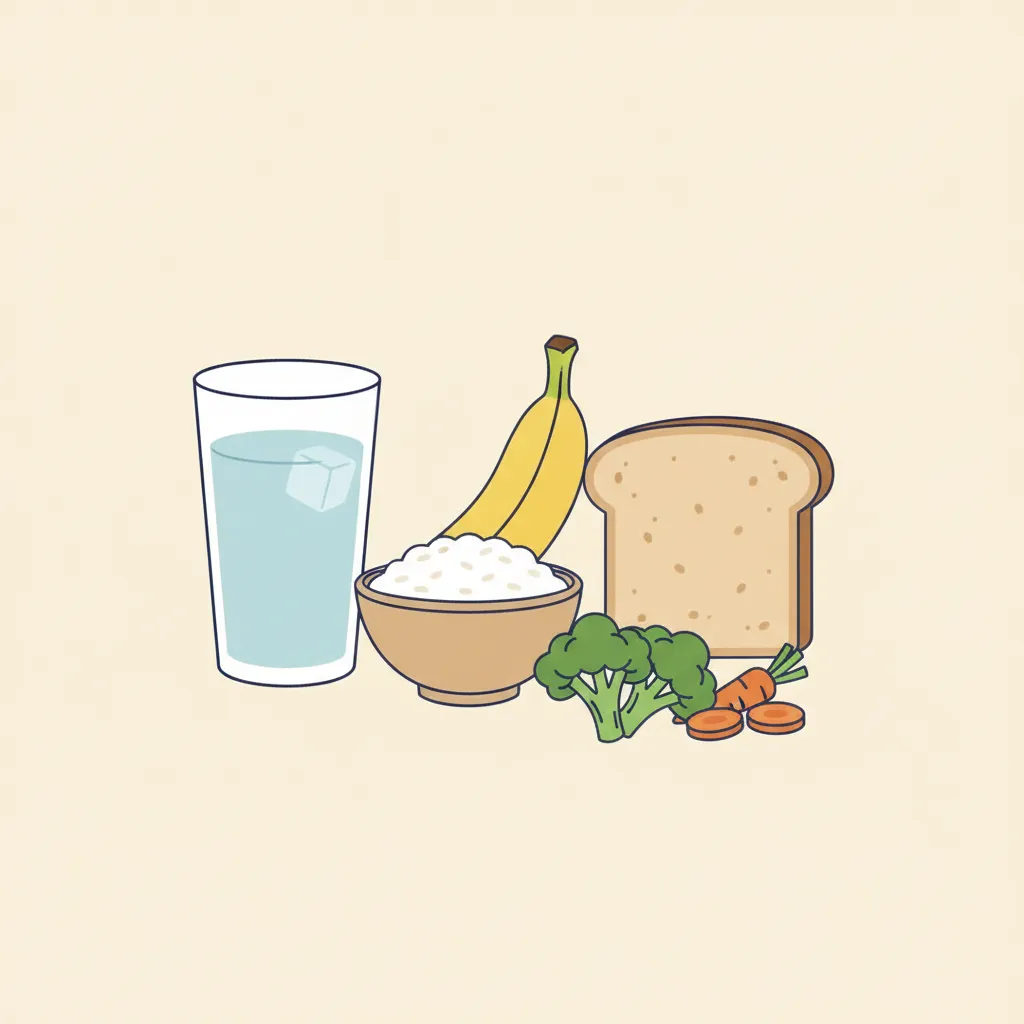
- Foods that thicken output (useful when output is loose): bananas, white rice, white bread, pasta, smooth peanut butter, boiled potato without skin, marshmallows, apple sauce.
- Foods that loosen output: spicy food, caffeine, alcohol, very sugary foods and drinks, some fried foods, and large amounts of fruit or fruit juice.
- Foods that increase gas: beans, lentils, cabbage, broccoli, cauliflower, onions, fizzy drinks, beer, and chewing gum (which makes you swallow air).
- Foods that increase odour: eggs, fish, garlic, onions, asparagus and some strong cheeses.
- Foods sometimes reported to reduce odour: yoghurt, buttermilk, cranberry juice and fresh parsley.
None of these foods are forbidden. The point is awareness — if you have an important meeting or a flight, you might choose to avoid the big gas-producers beforehand.
Avoiding food blockages
A food blockage is most relevant to people with an ileostomy, because the small-bowel opening is narrower than the colon. It happens when fibrous or poorly-chewed food can’t pass through.
Higher-risk foods include:
- Sweetcorn and popcorn
- Nuts and seeds
- Mushrooms
- Raw celery, asparagus stalks
- Dried fruit (raisins, apricots)
- Coconut and coleslaw
- Fruit and vegetable skins, pith and membranes
These foods are not banned — the rules are simply to chew them very thoroughly, eat smaller portions, and drink plenty of fluid when you eat them.
Signs of a possible blockage include cramping abdominal pain, a swollen stoma, watery output followed by no output at all, and nausea. First steps are usually a warm bath, gentle movement or massage around the stoma, sips of fluid, and stopping solid food. If output doesn’t return, the pain worsens, or you start vomiting, seek medical help promptly — a complete blockage needs assessment.
Hydration: the priority that’s easy to underestimate
Good hydration matters for everyone with an ostomy, and it is especially important with an ileostomy or urostomy, where more water and salt leave the body than usual.
General targets:
- Colostomy: roughly 1.5–2 litres of fluid a day.
- Ileostomy / urostomy: roughly 2–2.5 litres a day, more in hot weather, during exercise, or when output is high.
A crucial subtlety for ileostomies: when output is high, drinking large amounts of plain water can actually make dehydration worse by diluting the body’s salt levels. In these situations, an oral rehydration solution — which contains a precise balance of salt and sugar to maximise absorption — is far more effective. Sip fluids steadily through the day rather than gulping large volumes at once.
Watch for signs of dehydration: dark urine, dizziness on standing, headaches, dry mouth, muscle cramps and unusual tiredness. These should prompt more fluid (ideally with salt) and, if they persist, a call to your stoma care team.
Salt, minerals and longer-term nutrition
People with an ileostomy lose more sodium and magnesium than average, so adding a little extra salt to food is usually sensible rather than something to avoid (unless you’ve been told otherwise for another health reason).
Two longer-term points worth knowing:
- Vitamin B12: the last section of the small bowel (terminal ileum) absorbs vitamin B12. People who have had this section removed need lifelong B12 replacement, usually by injection. A simple blood test monitors this.
- Routine review: an annual check that includes hydration status and key blood levels is a sensible habit, particularly for ileostomies and urostomies.
Eating out, travel and social meals
A stoma should not stop you enjoying restaurants, holidays and social meals. A few simple habits help:
- If a big event or long journey is coming up, eat lighter and avoid major gas-producers beforehand.
- Carry a small supply kit and know where facilities are.
- On long flights or in hot climates, plan for extra hydration with oral rehydration sachets.
- Alcohol is fine in moderation for most people, but it can loosen output and is dehydrating — balance it with water.
When to ask for specialist help
Most diet questions can be answered by your stoma care nurse. Ask for a referral to a registered dietitian if you have:
- Persistent high output that’s hard to control
- Significant unintended weight loss
- Repeated blockages
- Another condition (such as diabetes or kidney disease) that complicates your diet
- Difficulty maintaining hydration despite trying the steps above
Support and community
Trusted resources are widely available and usually free of charge:
- Stoma care nurses at your hospital or community clinic — your most useful long-term resource for diet questions
- Registered dietitians with experience in bowel surgery, usually accessible through a referral
- National ostomy associations in your country — many publish food-and-fluid guides
- Online peer communities for shared, real-world tips on what worked for others
The bottom line
Eating well with an ostomy comes down to a handful of habits rather than a long list of banned foods: eat small and regular at first, chew thoroughly, introduce foods one at a time, keep a short food diary to learn your own triggers, and — especially with an ileostomy or urostomy — drink enough fluid and salt. With those in place, the great majority of people enjoy a full, varied diet and rarely have to think about their stoma at mealtimes.
Free guide
The New Ostomy Patient Guide
Everything for the first weeks with a stoma — pouching, skin care, diet, and getting back to daily life. Written with stoma care nurses. Free, by email.
Common questions
Frequently asked questions
- Is there a special diet I have to follow with an ostomy?
- No. There is no single 'ostomy diet'. Most people return to a varied, near-normal diet within a few weeks of surgery. The main adjustments are practical: chew thoroughly, introduce new foods one at a time so you can spot personal triggers, and — especially with an ileostomy — drink enough fluid and salt. Your stoma care nurse or a dietitian can tailor advice to your stoma type.
- Which foods cause the most gas and odour?
- Common gas-producers include beans, lentils, cabbage, broccoli, onions, fizzy drinks and chewing gum. Foods that often increase odour include eggs, fish, garlic and asparagus. Everyone is different, so a short food diary is the best way to learn your own triggers. Yoghurt, buttermilk and parsley are sometimes reported to help reduce odour.
- What is a food blockage and how do I avoid one?
- A food blockage happens when fibrous, poorly-chewed food can't pass through the bowel — most relevant for ileostomies. High-risk foods include sweetcorn, popcorn, nuts, mushrooms, celery, dried fruit and fruit skins. To reduce the risk: chew very thoroughly, eat smaller portions of these foods, and stay well-hydrated. Signs of a blockage (cramping, watery output then no output, a swollen stoma, nausea) need prompt attention — start with a warm bath, gentle movement and fluids, and seek medical help if it doesn't clear.
- How much should I drink with an ostomy?
- Aim for around 1.5–2 litres a day with a colostomy, and 2–2.5 litres with an ileostomy or urostomy, more in hot weather or with high output. With an ileostomy in particular, plain water alone may not be enough when output is high — oral rehydration solutions (which contain the right balance of salt and sugar) are far more effective at keeping you hydrated than water alone.
- What foods should you avoid with a stoma?
- No food is strictly forbidden, but some are worth limiting. With an ileostomy, high-risk blockage foods such as sweetcorn, popcorn, nuts, mushrooms, raw celery, dried fruit and fruit skins should be chewed very thoroughly and eaten in small amounts. Big gas-producers (beans, cabbage, fizzy drinks, chewing gum) and strong-odour foods (eggs, fish, garlic) can be timed around social events. Otherwise, reintroduce foods one at a time and let your own reactions guide you.
- Can you eat pizza with a stoma?
- Yes. Pizza is fine for most people with an ostomy. It can be fairly rich and may loosen output a little, and toppings like onions, peppers or mushrooms can add gas, so chew well and notice how you react. If you have an ileostomy, go easy on tough crust edges and fibrous toppings, and stay hydrated. There is no need to avoid pizza unless your own experience shows it disagrees with you.
- Can you drink coffee with an ostomy?
- Yes, in moderation. Coffee is safe with an ostomy, but caffeine can speed up the bowel and loosen output, and it has a mild dehydrating effect. With an ileostomy or urostomy, where fluid balance matters more, balance each cup with water or an oral rehydration drink. Many people tolerate coffee perfectly well; a short food diary will show whether it affects your output.
- How many times a day should you empty an ostomy bag?
- There is no single correct number, as it depends on your stoma type and what you eat. As a rough guide, empty the bag when it is about one-third to half full — often around 4 to 8 times a day for an ileostomy or urostomy, and a few times a day for a colostomy. Emptying before it gets too full protects the seal and reduces the risk of leaks rather than following a fixed schedule.
References